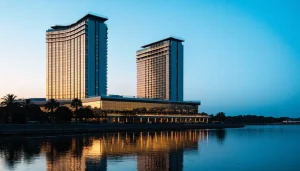
The page distinguishes casino-operated accommodation from nearby hotels and explains why listings and prices need clear property and booking terms.

A Canberra casino hotel is a specific kind of property: accommodation presented as part of, or directly operated by, a casino. That is different from a hotel that happens to be in Canberra or describes itself as close to a casino. The wording matters because it changes what a room rate is supposed to include. A casino name in a listing, heading or promotional phrase does not, by itself, establish that the property operates a hotel.
A price without a named property, stay dates, room conditions and booking terms is not a useful comparison; it is a figure detached from the purchase it supposedly represents.
The same test applies to claims about casino hotel rooms. A room description should identify the property and explain what is included in the price. A casino connection should be explicit rather than inferred from a photograph, a location label or a broad use of the word “casino”. If those details are absent, the listing may describe ordinary accommodation, an unrelated property or a promotion whose terms cannot be assessed from the headline.
Choosing a casino for Canberra means checking the details that matter to you, such as licensing, deposit minimums and payout methods. This list offers a concise reference to help you assess the available options.
Uptown Pokies
Uptown Pokies has operated since 2017 and lists a Curacao licence. Its minimum deposit is A$20.
DragonSlots Casino
DragonSlots Casino lists a Curacao Gaming Authority licence, with Jumpman Gaming Ltd named in its licensing details.
SkyCrown
SkyCrown lists a Tobique Gaming Commission licence and a minimum deposit of A$30. Its stated payout times are around 10–15 minutes for crypto and 1–5 days for fiat.
LevelUp Casino
LevelUp Casino lists a Curacao eGaming licence, OGL/2023/174/0082, held by Dama N.V. Its minimum deposit is A$15.
WinSpirit Casino
WinSpirit Casino lists a Curacao eGaming licence, OGL/2024/923/0383, held by Antillephone N.V. Its minimum deposit is A$30.
Wild Tokyo
Wild Tokyo lists a Curacao licence and a minimum deposit of A$10. Its stated payout times are 30–60 minutes for crypto and 1–5 days for fiat.
Playfina Casino
Playfina Casino lists a Curacao eGaming licence held by Hollycorn N.V. and has operated since 2017. Its minimum deposit is A$20–30, depending on the offer.
Roby Casino
Roby Casino lists a Curacao eGaming licence held by Roby Games Ltd.
House of Pokies
House of Pokies lists an international iGaming licence, though the jurisdiction is not named in the source. Its stated PayID payout time is 1–24 hours; the minimum deposit is A$30, or A$10 for PayID.
Golden Pokies
Golden Pokies lists a Curacao licence.
“Deal” also needs a defined calculation. A lower displayed rate may depend on dates, occupancy, cancellation conditions or other restrictions. A package may combine accommodation with an additional benefit, but the benefit has value only if its conditions and availability are clear. Without those details, a discount label cannot establish that the total cost is lower or that the offer is suitable for a particular stay. The headline is packaging; the payable amount and its conditions are the substance.
A practical comparison therefore starts with the property name and the booking terms, not with the phrase “casino hotel”. The listing should make clear who supplies the accommodation, what room is being sold and which conditions apply to the quoted rate. If it claims that the hotel is casino-operated or attached to a casino, that relationship should be stated plainly. Otherwise, the casino association remains a description, not a demonstrated feature of the booking.
Opening hours require the same separation of claims. Hotel reception hours and casino operating hours are not interchangeable, and neither can be inferred from a hotel booking page. A room listing does not establish that a casino is open, or specify when any casino venue admits guests. Hours are operational information that can change; a current, venue-specific notice is needed before relying on them. A general search result or an old promotional page is not a substitute for a dated schedule.
There is also a difference between a casino hotel and a hotel near a casino. The first implies a property or commercial relationship; the second describes proximity. That distinction should not be blurred to make a location sound like an amenity. A hotel’s address, even if close to a casino, does not make it casino-operated, and a casino reference does not prove that accommodation is available on site.
For anyone assessing a Canberra casino hotel offer, the defensible standard is modest: identify the property, confirm what the rate buys, read the conditions and establish whether the casino relationship and operating information are stated directly. A neat package name cannot do the work of a booking record.
A poker room, a poker tournament, guest rooms and a gym are separate facilities, even when they appear together in a description of a casino. One does not establish the presence of another. A venue name or a broad label such as “casino” is not enough to support assumptions about the services on site.
Poker-related searches can mean different things. A poker room implies a designated place to play; a tournament implies an organised event with its own schedule and entry conditions. Cash games, tournament play and electronic gaming are not interchangeable descriptions. Before treating any of them as available in Canberra, the venue’s own current information would need to identify the specific game or event, its operating arrangements and any participation terms. A poker event mentioned in an old listing would not, by itself, confirm that it is running now.
The distinction matters financially. Tournament entry conditions, start times and prize structures can change, while a room’s general gaming description may say nothing about scheduled poker. A clear event notice should state what is being offered and when. Without those details, a reference to poker is not a usable booking or attendance plan.
“Rooms” is equally ambiguous. It may refer to a poker room inside a gaming venue or to bedrooms for overnight guests. Those are different products, with different availability, prices and booking terms. The phrase “casino rooms” does not establish that accommodation is attached to a casino, nor does a hotel room listing establish access to gaming facilities. Accommodation should be checked as accommodation; a gaming-room claim should be checked as a gaming-facility claim. Combining the two in one label may be convenient for a listing, but it does not make them one service.
A sports bar is another independent claim. A bar may be part of a hospitality venue without offering casino gaming, and a casino’s existence would not prove that it operates a bar. The practical details are the venue’s current opening hours, food and drink service, age or entry conditions, and whether the bar is actually within the property being considered. “Open now” is time-sensitive: a general directory entry can remain visible after hours or operational details have changed. It should not be treated as confirmation of today’s service.
A gym is a fitness amenity, not a consequence of a casino or hotel label. Its access rules may differ from those for a gaming area or accommodation, and a gym listed for a nearby hotel should not be attributed automatically to a casino. Any claim about membership, guest access, equipment or operating hours requires confirmation from the operator responsible for that facility.
For Canberra, the useful test is whether each service is identified separately by the business that provides it. A current poker schedule cannot verify guest rooms; a hotel description cannot verify a tournament; a bar listing cannot verify a gym. Where a single listing bundles these claims, each item needs its own confirmation before it can be treated as part of the same venue. This avoids turning a collection of related terms into an assumed package—and avoids planning around facilities that the listing may not actually describe.
“Canberra casino” can refer to a physical venue, while searches for baccarat or craps may be about online table games. Those are separate questions. A venue’s location, contact details, bar, car park or concert programme cannot be established by the wording of an online-gambling search, and an online game listing does not confirm that a Canberra venue offers the same game.
The legal position for online casino games in Australia is more direct. Under the Interactive Gambling Act 2001, operators based in Australia cannot provide real-money online casino games to people in Australia. That restriction covers pokies and table games such as blackjack and roulette. The issue is not whether a site calls itself a casino or offers a map, a local contact number or a familiar game name; it is whether the service is being provided to customers in Australia.
Offshore websites are not a local substitute with an Australian casino licence. Their position is often described as a grey area for players, but that does not make the services regulated under Australian law or turn them into lawful Australian providers. The law targets operators providing prohibited services to people in Australia. A familiar brand, Australian-facing page or local-sounding contact detail does not alter that distinction.
Access can also be restricted by location. Online casinos and game providers may use a player’s IP address to determine where a connection originates and block access from excluded countries. When a game is restricted for Australian users, it may be absent from the lobby or fail to load. A missing baccarat table or craps game therefore says nothing about what a Canberra venue offers; it may reflect an online access restriction instead.
A VPN can make a connection appear to come from another country, but using one to reach region-blocked pokies sites breaches the site’s terms of service and may result in account suspension. It does not create an Australian licence or change the operator’s obligations under Australian law. The apparent location of a connection and the player’s actual location are not the same thing, and treating them as interchangeable is a poor basis for a money decision.
For a search about a Canberra venue, the useful evidence would be venue-specific: an official page or direct confirmation establishing the relevant game, address or contact details. For an online game, the relevant questions are different: whether the service is lawful for Australian customers and whether access is blocked from Australia. These checks should not be collapsed into one result merely because both use the word “casino”.
The practical distinction is simple: a physical casino enquiry concerns a venue and its confirmed facilities; an online casino enquiry concerns a service restricted by Australian law. Offshore access does not make that service locally regulated, and a game appearing in an online catalogue does not establish that it is available to someone in Australia.
A parking enquiry is about access to a particular address, not evidence that a casino operates there. References to parking, valet service or free parking need to be tied to a named venue and current conditions. Without those details, there is no sound basis for stating that parking is available, whether it is complimentary, or whether a valet service operates. A facility’s name in a search result does not settle any of those points.
The distinction matters because each claim has its own terms. “Parking available” does not establish that spaces are free; “valet parking” does not establish the hours or conditions of the service. Those details can affect the actual cost and practicality of a visit. Until a venue publishes them, a price or service description would be guesswork rather than useful guidance.
Bingo is another separate question. A casino-related phrase does not establish that bingo is offered at a Canberra venue, or that it shares premises with a casino. Bingo availability, session times and entry conditions would need to be confirmed against the specific organiser’s current information. None can be inferred from a parking listing or from the word “casino” in a venue description.
Dining is separate again. A venue’s parking arrangements say nothing about whether it has a restaurant, what it serves or when it opens. Those are independent facilities and operating details, not automatic components of a casino visit. Treating several unrelated amenities as one package can make an unverified listing look more complete than it is.
Online casino services require a different distinction altogether. A physical venue in Canberra and an online casino accessible from Canberra are not interchangeable forms of gambling. Under the Interactive Gambling Act, an Australian-run online casino cannot offer its services to players located in Australia. A page describing a venue, its parking or bingo therefore does not establish that an online casino service is lawful or available to local players.
The word “Canberra” in an online gambling offer is not proof of a local licence, local operation or lawful provision of online casino games. The legal position turns on the service and where it is provided, not on the wording used to attract visitors. A real-world venue’s existence cannot be used to validate an online offer bearing the same city name.
For a visit, the relevant checks are venue-specific: address, parking access, any fee or complimentary condition, and confirmation that the stated service is operating. Bingo requires its own confirmation from the organiser. Online casino claims should be assessed separately under Australian law. Combining these questions produces no reliable answer; separating them keeps each claim attached to the evidence it would actually require.
Accommodation near a casino and a casino-branded hotel are different propositions. A nearby hotel may be an independent property with no commercial connection to a gaming venue; a room advertised as part of a casino stay implies a specific operator, location and package. Those distinctions matter when comparing prices, inclusions and cancellation conditions.
For Canberra, a stay should not be booked on the assumption that a casino is the hotel’s neighbour or that a casino accommodation package is available. A property’s own address and current booking terms are the useful evidence for the stay. The word “casino” in a listing or promotional phrase is not a substitute for either.
A headline deal has little value without its conditions. The relevant comparison is the total payable amount for the chosen dates, including any mandatory charges disclosed during checkout, against the same room booked without the promotion. The final price, rather than a claimed discount, is the decision figure.
The booking terms should also establish what is included. A package might describe accommodation alone, or it might attach dining, parking or another service; each item has value only if the property confirms it and explains any restrictions. A promotion that depends on a particular booking channel, date or room type is not interchangeable with a general room rate.
Cancellation and payment conditions affect the practical cost. A lower price may be less useful if changes are restricted or the payment is non-refundable. The terms to retain are the property name, room type, stay dates, total price, included services and cancellation conditions. That record makes later comparisons possible without relying on a promotional label.
“Near a casino” is meaningful only when both the accommodation and the intended venue have identifiable addresses. Distance can then be assessed against the actual route and the form of transport planned. A vague location description does not establish walking distance, convenient access or a connection between businesses.
Opening times and trading hours are also venue-specific. They should be confirmed directly before being used to plan a stay; a hotel reservation does not establish that a casino is open, nor does a promotion establish access to gaming machines or poker machines. Those are separate operating details, not lodging inclusions.
Parking requires the same separation. A hotel may offer parking, a nearby venue may have its own arrangements, or neither may suit the booking. The property’s terms should identify whether parking is available and whether it is included in the quoted total. An unqualified “parking nearby” statement does not settle the cost or availability.
A sound Canberra accommodation decision therefore rests on a named property, its address and a complete booking price with conditions. Casino-related wording adds no value until it corresponds to a confirmed venue and a defined package. Without those particulars, the sensible comparison is between ordinary accommodation offers on their stated terms—not an assumed casino deal.
Breakfast, a buffet, resort facilities and a rewards programme are separate propositions, not one bundled feature implied by the phrase “Canberra casino”. Each needs its own terms. A breakfast service might be a meal offered by a food venue; a buffet describes a service format; a resort suggests a broader accommodation and leisure proposition; rewards describe conditions attached to member activity. One label does not establish the others.
A buffet breakfast claim needs practical detail to be meaningful: the venue providing it, the days and service hours, whether it is open to non-guests, and whether the price is included in a room booking or charged separately. “Buffet” alone says nothing about the dishes, availability or final cost. Likewise, a breakfast offer attached to accommodation should identify the property and explain what the rate includes. Without those terms, a headline cannot be treated as a usable deal.
The word “resort” carries a broader implication than a casino or a hotel. It suggests a package of facilities or services, so the relevant description would need to identify what is actually provided and which parts are accessible to guests. A building’s name or a promotional label is not a substitute for an itemised offer. The useful comparison is between stated inclusions and the total price, not between adjectives.
Rewards also require a calculation rather than a name. A programme’s value depends on how points or benefits are earned, what activity qualifies, how they can be redeemed and whether exclusions apply. Any conditions governing expiry, access or redemption affect the practical value. A “member benefit” without those mechanics cannot be compared with a cash discount or an included meal. The gross headline benefit and the amount a member can actually use are not necessarily the same figure.
These distinctions matter when a single listing appears to cover breakfast, buffet dining, resort amenities and loyalty benefits. Each item should be supported by its own current terms, with the provider and eligible dates clearly stated. A room package, a restaurant service and a membership scheme may involve different operators and separate conditions. Treating them as one offer can obscure which component is included and which adds to the bill.
Requires details on the providing venue, service hours, and whether it is included in the room rate.
Needs an itemised offer of provided services and an explanation of guest accessibility.
Depends on specific rules for earning, redeeming, and the conditions governing expiry.
Employment searches are a separate matter from guest amenities. A breakfast service or rewards programme does not establish that a casino is recruiting, nor does a job listing establish that those services are available. Employment claims need their own evidence, such as a named employer, role description and application information; they should not be inferred from promotional language about a venue.
For Canberra, the distinction is straightforward: breakfast, buffet service, resort facilities and rewards each require a specific, attributable description before they can be counted as part of a casino offer. Until the terms identify the provider, inclusions and conditions, the sensible financial treatment is to assign them no value in a comparison.
A Canberra casino’s opening status is a time-sensitive operational question, not something established by an old listing, an event page or a proposed development. “Open” may refer to a venue operating now; “reopening” may refer to a confirmed return after a closure. Those are different claims and need current, dated evidence. An official venue notice or government announcement is more useful than a search snippet that may preserve outdated wording.
Development claims need the same separation between stages. A proposal, planning application, approval, construction activity and completed venue are not interchangeable. A credible account should identify what stage has actually been reached and who made the announcement. Without that distinction, “casino development” can describe anything from an idea to an operating business. Treating the phrase as proof of a project would be an expensive shortcut.
Events and entertainment are also date-bound. A listing should state the event, venue and date, with a current source confirming that it is scheduled. A general entertainment page does not establish that a particular performance is happening, while an old listing does not establish a current programme. For any event, the useful details are the confirmed schedule and the conditions attached to attendance; promotional language alone has little practical value.
Employment information should be read as a specific vacancy, not as evidence that a venue is hiring generally. A usable listing identifies the employer, role, location and application process, and should still be live when considered. A development announcement may discuss future jobs without creating current openings. Forecast employment and an available position belong in separate columns.
A review should likewise separate direct observations from claims that can change: operating status, event schedules, employment listings and facilities may all be updated independently. The date and basis of a review therefore matter. Praise or criticism without a clear subject, timeframe or supporting detail has little value for deciding whether a venue is open or what it currently offers.
The same discipline applies to menu references that appear alongside event or venue information. A menu is a separate, changeable detail; its appearance in an old listing does not confirm a current service or current opening status. It should not be treated as evidence for either.
For a practical assessment, the relevant records are a current official status notice, a dated announcement for any development, an event listing tied to a specific date, or an active vacancy published by the employer. Each answers a different question. Combining them into one broad claim about a Canberra casino creates certainty that the underlying information may not support.
An address is the first detail that should be settled before planning a visit. A Canberra casino address cannot be supplied responsibly without a confirmed venue identity and current location. Similar names, outdated listings and businesses that use “casino” descriptively can point to different places. A map pin alone is not enough: the venue’s own current contact information should match the address, entrance and transport details before a trip is arranged.
The same standard applies to bars. A listing that mentions drinks does not establish that a casino has an on-site bar, how many bars it operates, or whether they are open to all visitors. Those are operational details, not features that can be inferred from the word “casino”. Hours, access conditions and service availability may also change, so an old directory entry is a poor basis for making plans.
Spa searches require an equally literal check. A day spa may be a separate business, a hotel amenity or an advertised facility within a larger complex; those arrangements are not interchangeable. A casino’s name appearing beside a spa in a directory does not by itself establish shared ownership, access or booking arrangements. A current venue page or direct confirmation is needed before treating a spa as part of a casino visit.
Dress-code information should be checked against the specific venue and the particular area being visited. A general description of a city’s nightlife does not establish entry requirements for a casino, bar or event. Where a venue publishes clothing or entry conditions, those terms are more useful than assumptions based on other casinos. If no current policy is available, the practical answer remains uncertain rather than “smart casual” by default.
Requests about casino games also need a clear venue context. A physical gaming floor, if one is confirmed, is different from a website offering online play; the wording alone does not establish which is meant. For a venue visit, the relevant details would be the games actually available on site and any entry conditions. Online casino games are a separate legal subject in Australia and should not be treated as a local venue service.
Careers searches should lead to an identifiable employer and its own recruitment information. A generic job listing or an old vacancy does not confirm that a Canberra casino is hiring, nor that the role is attached to a casino rather than a hotel, bar or another business. Before relying on a position description, the employer name, work location and application status should agree. These checks are less glamorous than a spa listing, but substantially more useful.
A restaurant cannot be treated as a confirmed feature of a Canberra casino. No named dining venue or menu can be relied on as an established part of the local casino offering, so a restaurant recommendation tied to that premise would be guesswork.
The distinction matters because a restaurant in Canberra and a restaurant inside a casino are not interchangeable. A listing that places a dining business in the same suburb, building or entertainment precinct does not, by itself, establish that the casino operates it or that it is available to casino guests. The venue’s identity and its relationship to the casino need to be clear before either is presented as a casino restaurant.
Menu details require the same discipline. Cuisine, signature dishes, service hours, booking arrangements and prices are all changeable particulars. Without a confirmed restaurant, none can responsibly be attached to a Canberra casino. A polished menu description is still only packaging if the underlying venue has not been established.
The phrase “Canberra casino” can also refer to a hoped-for destination rather than a verified dining address. That makes it easy for unrelated restaurant results to acquire a casino association through wording alone. A nearby business may serve a useful purpose for someone planning an evening out, but proximity does not make it a casino restaurant. Nor does a restaurant’s appearance in a general directory establish an operating connection.
A reliable restaurant claim should identify the business and show that it is currently associated with the venue. The details should be checked against information maintained by the restaurant or the casino, rather than repeated from an old listing. Where that connection cannot be established, the accurate description is not “casino dining”; it is an unconfirmed venue claim.
This leaves the practical answer narrow: there is no confirmed Canberra casino restaurant to recommend by name, and no menu to compare. That is different from saying Canberra has no restaurants, or that dining cannot be found elsewhere in the city. It means only that a casino-specific restaurant recommendation cannot be made as a settled fact.
For anyone comparing a particular restaurant claim, the useful checks are straightforward: confirm the restaurant’s current name, its location, whether it is formally part of the casino, and whether its menu is current. Until those details line up, a dining plan should not depend on the casino having an attached restaurant. A plausible venue description is not a substitute for an identifiable business.
 Pokies & Games: Slots, Casinos and Online PlayBrowse coverage of online pokies, slot types, casino games and casino searches across Australian cities and regions, including Adelaide, Brisbane and Sydney.
 Victoria Casino Hotels and Accommodation GuideLearn how on-site rooms, nearby hotels and casino-linked packages differ, and why booking terms should identify the accommodation provider and inclusions.
A food court and a swimming pool are separate facilities, not automatic features of a casino. The word “casino” in a venue name does not establish that either amenity is on site. For Canberra, those details need to be tied to a specific venue rather than inferred from a general destination description.
A food-court listing should identify an actual dining area and its location within the property. That is different from a restaurant, bar menu or takeaway counter: the terms describe different formats, and one does not confirm the others. Where a venue’s own facilities information names food outlets but not a food court, the narrower description should be retained. General references to food at a casino are not enough to establish a dedicated court.
Pool information also needs precise wording. A pool could be a hotel amenity, a public facility or part of a separate leisure complex; none of those descriptions confirms that casino visitors have access. A listing should make clear which property contains the pool and whether access is connected to casino entry, accommodation or another arrangement. Without that distinction, “casino pool” can overstate the connection.
For both amenities, the useful check is the venue’s own current facilities information, with the specific property named. A map can help establish whether an amenity is on site or nearby, while operating details and access conditions should come from the venue rather than assumptions based on a brand or precinct. Third-party summaries may group several neighbouring businesses under one destination label, which can blur ownership and access.
The practical distinction is simple: food available somewhere in a precinct is not necessarily a casino food court, and a pool nearby is not necessarily a casino facility. Each claim needs a named location and a clear relationship to the venue.
Australian-run online casinos cannot legally offer online casino games to people in Australia under the Interactive Gambling Act. Australian players can technically use offshore casinos, but those platforms are not regulated under Australian law, so their status is a legal grey area.
Examples include progressive jackpot pokies, which add a portion of bets to a growing jackpot, and buy-bonus games, which let players pay to enter a bonus round directly.
Club Liverpool has the highest number of operational poker machines among clubs in NSW.