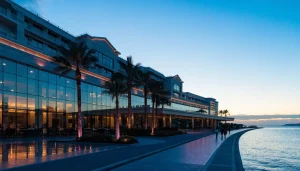
Property-specific rates, access, services and venue details cannot be assumed without verified terms or named information.

A casino hotel search combines two separate questions: whether a casino operates accommodation as part of its property, and what a stay would cost under the terms being offered. A specific property, room type, rate, or package should therefore not be treated as confirmed.
The distinction matters because “casino hotel” can describe several different arrangements. A hotel may be physically attached to a casino, share a wider resort site, or simply be marketed alongside a nearby venue. Those arrangements do not establish the same level of access or inclusion. A room rate could cover accommodation alone; a package might add other services, but the word “deal” says nothing about what is included or what conditions apply. Without named terms, there is no sound basis for comparing a room price with a package price.
Room-related claims require the same discipline. Descriptions such as a view, suite, accessible layout, family configuration, or direct casino access are property-specific. They cannot be inferred from the fact that a venue is described as a casino, nor from the use of “resort” in promotional language. Likewise, a photograph or broad label is not a substitute for the conditions attached to a particular room category. Any booking decision depends on the property’s own current description, the dates selected, the cancellation rules, and the final amount payable.
Choosing an online casino for Queensland in 2026 calls for a close look at the details available about each operator. This list offers a concise starting point for reviewing licensing, deposit minimums and payout information where provided.
Uptown Pokies
Uptown Pokies is listed as operating since 2017 under a Curaçao licence. Its minimum deposit is A$20.
DragonSlots Casino
DragonSlots Casino is licensed by the Curaçao Gaming Authority, with Jumpman Gaming Ltd named in the licensing information.
SkyCrown
SkyCrown is licensed by the Tobique Gaming Commission. Its stated payout times are around 10–15 minutes for crypto and 1–5 days for fiat, and the minimum deposit is A$30.
LevelUp Casino
LevelUp Casino lists a Curaçao eGaming licence, OGL/2023/174/0082, held by Dama N.V. Its minimum deposit is A$15.
WinSpirit Casino
WinSpirit Casino lists a Curaçao eGaming licence, OGL/2024/923/0383, held by Antillephone N.V. The minimum deposit is A$30.
Wild Tokyo
Wild Tokyo is licensed in Curaçao and lists a A$10 minimum deposit. Its stated payout times are 30–60 minutes for crypto and 1–5 days for fiat.
Playfina Casino
Playfina Casino is licensed by Curaçao eGaming, with Hollycorn N.V. named as the licensee and a start date of 2017. Its minimum deposit is A$20–30, depending on the offer.
Roby Casino
Roby Casino is listed under a Curaçao eGaming licence, with Roby Games Ltd named in the licensing information.
House of Pokies
House of Pokies lists an international iGaming licence, but the jurisdiction is not named in the available information. Its stated PayID payout time is 1–24 hours; the minimum deposit is A$30, or A$10 for PayID.
Golden Pokies
Golden Pokies is listed as licensed in Curaçao. No further details are provided here, so this verdict is limited to its licensing information.
A useful offer is a set of terms, not a headline. The relevant calculation is the total charge for the intended stay, together with any mandatory fees and restrictions that affect the booking. The offer should state which room category is included, whether the quoted amount changes by date, what payment is due and when, and what happens if plans change. If a package mentions casino access or another inclusion, that item should be described explicitly rather than assumed from the package name.
The same approach applies to comparisons. Two advertised prices are not equivalent if one is refundable and the other is not, or if the room categories differ. A discount percentage, without a clearly stated comparison price and booking conditions, does not establish the amount saved. No Queensland-specific hotel deal can be assessed on those terms without an identifiable offer and its conditions.
A hotel stay should also be kept distinct from simply finding accommodation near a casino. An on-site hotel, if one is confirmed, would be a different proposition from an independent property elsewhere in the area. The latter does not become a casino hotel merely because it is close to a venue. Distance, transport, and availability would need separate confirmation; proximity alone establishes none of them.
 Sydney Casino Guide: Hotels, Poker and Venue DetailsLearn how to distinguish on-site accommodation from nearby hotels and what to verify about poker, dining, venue services and online access.
 3-Reel Slots in Australia: RTP, Free Play and AccessLearn how independent RNG spins differ from long-run RTP, and what to check in paytables, game versions, free play and Australian access.
Opening hours do not resolve the accommodation question. A casino’s operating schedule and a hotel’s check-in, reception, or guest-access arrangements are separate matters. Even a confirmed venue schedule would not establish when rooms can be occupied, what services are available to hotel guests, or whether a package includes entry to any facility. These details need property-specific terms rather than assumptions drawn from the casino label.
For a Queensland stay, the financially relevant record is the booking confirmation: property name, room category, dates, full price, payment timing, cancellation terms, and any stated inclusions. Until those particulars are attached to a real offer, “casino hotel” remains a description of the type of stay being sought, not evidence that a particular hotel, room feature, or bargain is available. The difference is not semantic; it determines what is being paid for and what the booking actually guarantees.
Poker-room searches concern a specific gaming offer: whether poker is available, what formats are played, and whether scheduled tournaments are running. Those details should not be inferred from a casino’s name, a hotel listing or a general description of its facilities.
A tournament listing is useful only when it identifies the venue and gives current event terms. Relevant details include the date, registration arrangements, entry cost, game format and any rules for late entry or re-entry. Without those particulars, a mention of a “Queensland casino poker tournament” is not enough to establish that an event is scheduled or open for registration. An old result may describe a past event, not a continuing series.
The same distinction applies to a poker room. A room’s existence does not establish that it is open, that cash games are available, or that a particular game is being dealt. Even a current venue page may not settle those points if it gives no operating information. A reliable confirmation needs to be specific to the location and recent enough to describe the date in question. Otherwise, the practical status remains unconfirmed.
“Queensland casino rooms” can also mean hotel accommodation rather than poker facilities. The word *room* does not identify the service being sought. A poker-room description should concern games and operating conditions; accommodation information concerns overnight stays. Treating one as proof of the other produces a category error, not a useful answer.
Tournament terms matter as much as the event name. A calendar without entry conditions leaves the financial commitment unclear. A promotion without a date does not establish that registration is available now. Where published terms are absent, no entry cost, prize pool, schedule or player capacity should be assumed. Those are not minor omissions: they determine whether an event is suitable and whether it is actually accessible.
Poker searches can also be confused with a casino’s broader entertainment offer. A sports bar is a separate facility from a poker room, and a sports broadcast does not establish that poker is available on site. Conversely, a poker listing says nothing about bar services. Neither should be used as a substitute for venue-specific information about the other.
Opening-status searches require particular care. A venue may operate while a poker room or tournament does not; general opening status alone would not establish that poker is running. “Open today” is therefore not a sufficient confirmation of a game or event. The relevant information is the current status of the poker operation itself, not merely whether some part of a venue is accessible.
 Best Casino in Adelaide: Hotels, Dining and MoreUnderstand what Adelaide casino searches can and cannot confirm, from accommodation and dining to poker rooms, parking, events and online gambling.
 5-Reel Slots in Australia: Features and TermsCompare bonus mechanics, RTP and game settings without treating features as guarantees. Sweet Bonanza’s review describes 10 free spins after four or…
The legal distinction also matters when the phrase “poker at a casino” is used. An in-person venue search and an online poker service are not interchangeable. Under the Interactive Gambling Act 2001, operators cannot provide real-money online poker to people physically located in Australia. That restriction concerns online services; it does not confirm the presence, format or schedule of any Queensland venue’s in-person poker offering.
For a sound comparison, Queensland-specific claims should be tied to a current venue announcement or event notice with identifiable terms. Until those details are established, room names, games, tournament dates and entry conditions should not be presented as available options. A polished event title is packaging; the date and terms are the substance.
Breakfast and buffet searches often combine several separate purchase decisions: whether a meal is served, what the meal includes, when it is available and whether access is tied to a room, package or membership. A buffet breakfast should not be treated as an established casino offering merely because the phrase appears in a listing or promotional description.
The same applies to the word “resort”. It can describe a property’s positioning, but it does not establish that a particular Queensland casino has resort accommodation, breakfast service or a bundled stay. Those are separate terms. A package would need to identify what is included, when it can be used and whether any conditions apply. Without those details, the label has little value for comparing the cost of a stay.
A useful breakfast comparison depends on more than the word “buffet”. The relevant terms would include the food provided, service period, eligibility and whether the price is included in a room or charged separately. None of these should be assumed for a Queensland casino. Nor does “breakfast” establish that service is available every day, or that a buffet is the format.
The same distinction matters when a meal is advertised as part of a resort stay. A package price cannot be assessed without knowing which services it covers and which remain separate charges. A headline that names breakfast but omits the applicable conditions does not establish the final cost.
This is not a claim that buffet or breakfast service is unavailable. It is a limit on what can responsibly be represented as fact: no Queensland venue, menu, service period or inclusion is confirmed here. The practical distinction is between a possibility and a priced, defined offer. Only the latter supports a meaningful comparison.
Rewards language also needs a defined calculation. A programme’s name alone would not show how points are earned, what they can be exchanged for, whether benefits have eligibility conditions or whether an advertised perk applies to meals or accommodation.
A resort label does not fill that gap. It should not be read as proof of membership benefits, complimentary meals or a discount. Those terms would need to be set out explicitly, including any exclusions that affect the final value. Until then, a reward claim cannot be assigned a reliable cash value.
Employment searches sit outside the cost of a meal or stay. A reference to casino jobs does not establish a current vacancy, employer, role or application condition. Those details require a specific listing rather than an assumption based on a venue category.
For a Queensland breakfast or buffet offer, the decision points are therefore straightforward: confirm the venue, the meal format, service conditions and final price before treating it as available. For rewards, the equivalent test is whether the benefit and its conditions are stated clearly enough to calculate. Without those terms, neither a resort label nor a rewards reference establishes what is included.
A search for the best casino in Queensland can refer to an in-person venue or to gambling over the internet. Those are different activities, with different legal positions. A Queensland venue search does not establish that an online casino is lawful, locally licensed or connected to any physical casino.
The Interactive Gambling Act 2001 prohibits operators based in Australia from providing real-money online casino games to people located in Australia. That restriction covers pokies as well as table games such as blackjack and roulette. An Australian-run service cannot lawfully offer those games to local players simply by presenting itself as an online version of a venue.
Offshore platforms occupy a different, but not equivalent, position. It is technically not illegal for an Australian player to use one, yet an offshore casino is not regulated under Australian law. That legal grey area should not be mistaken for local approval or protection. Offshore operators do not become Australian providers by accepting Australian customers, and the existence of a website does not establish that it is authorised to offer casino games here.
The distinction matters for searches combining Queensland with online casino terms. A venue’s name, if one is being considered, cannot by itself verify an associated internet service or its legal status. Nor does a claim that a platform holds an overseas licence mean that it holds an Australian licence. The applicable boundary is the operator’s location and the service offered to people physically in Australia, not the branding used on a website.
Region restrictions add a separate practical issue. Online casinos and software providers may use a player’s IP address to identify their apparent location and block games in excluded regions. A blocked game may not appear in the lobby; in some cases, a game may fail to load because of a regional restriction. A specialist review has also reported that providers may restrict access in anticipation of possible changes to Australian gambling laws. That is a report about a changing practice, not a reliable prediction of what any particular game will do.
Using a VPN to make an Australian connection appear to come from another country does not remove the legal boundary. It may breach a platform’s terms of service and lead to account suspension. A changed digital location is not proof that the service is authorised in Australia, and access obtained by bypassing a regional block should not be treated as a dependable basis for an account or balance.
The practical calculation is therefore straightforward: an Australian-run online casino cannot lawfully supply real-money casino games to people in Australia; an offshore platform is not regulated under Australian law, even where player use is technically not illegal. Neither proposition confirms a Queensland connection, venue relationship or local consumer safeguard. Searches about dining, bingo or parking concern physical-venue information and cannot establish that online gambling is available or lawful.
“Near” is not a fixed distance. It depends on the venue’s exact address, the route between the property and its entrance, and how that route is travelled. A listing that appears close on a map may involve a different journey on foot or by road. Until the casino destination is identified, accommodation comparisons cannot be tied to a reliable location.
The useful comparison is the complete stay cost, not the nightly rate in isolation. A lower room price may come with stricter cancellation terms, advance payment or additional charges. A higher rate may include conditions that alter the total, but only if those inclusions are relevant to the stay. The advertised price is therefore a starting figure, not necessarily the amount ultimately payable.
A casino accommodation deal should be assessed by its conditions, rather than by the word “deal”. The material details are the dates covered, room availability, payment timing, cancellation rules and any required booking channel. If a promotion depends on a casino visit or another purchase, that condition changes the calculation: the room saving must be compared with the extra cost and any restrictions attached to the offer.
Availability is also date-specific. A displayed rate may apply only to selected dates or room types, and it may change before a reservation is completed. The final booking screen is the relevant point for confirming the price and conditions. A promotional headline without those terms has little value as a basis for budgeting.
For a Queensland casino visit, the comparison should keep accommodation separate from casino facilities. A nearby property does not, by itself, establish access to the casino, a package benefit or a particular service. Nor does a casino-related label prove that a rate is discounted. Those are separate terms and need to be stated in the booking details.
The total cost includes more than the room. Travel between the accommodation and the venue, parking requirements, meal arrangements and the timing of arrival or departure can all affect the practical value of a rate. These costs vary with the selected property and itinerary; they should not be assumed to be included in the room price.
Distance should be measured using the actual destination address and the intended route, not a broad suburb name. For a walking journey, the pedestrian route matters. For a drive, the route and any parking arrangements matter. An accommodation listing’s map pin may represent the property generally rather than the entrance used by guests, so the precise address is the better comparison point.
Cancellation terms deserve the same attention as price. A reservation that cannot be changed may be cheaper but exposes the full booking amount if plans shift. A flexible rate has value only when its conditions and price difference are clear. Comparing both on the same dates and room basis avoids treating unlike offers as equivalent.
No single “Queensland casino accommodation” rate can stand for every trip. The meaningful figure is the confirmed total for a named property, specific dates and stated terms, measured against the actual journey to the intended venue. Anything less is a headline, not a settled travel cost.
A Queensland casino contact number, address or map pin should be treated as venue information only when it is tied to an identifiable operator and confirmed through that operator’s current official channels. A phrase such as “Queensland casino” does not, by itself, identify a particular property. It therefore cannot establish which switchboard to call, which entrance a map marks or whether a listing belongs to a casino rather than a nearby business.
The same distinction applies to a bar or car park. A venue name appearing beside those terms is not confirmation that the facility exists, is open to the public or is part of the casino. For practical arrangements, the relevant details are specific: whether the facility belongs to the venue, where access is provided, and whether any conditions apply. Without confirmation from the operator, those points remain unknown; assumptions can turn a simple trip into a wrong address or an unusable booking.
Contact information also needs context. A published number may be for general enquiries, reservations, employment or a third-party listing. Those are not interchangeable channels. Before relying on a number or sending personal information, the associated organisation should be clear and the contact method should match the purpose. A map result can help locate an established venue, but it cannot establish current access arrangements or the accuracy of another listing.
Contact information should only be trusted when tied to an identifiable operator and confirmed through official channels. A phone number or map pin alone does not identify the specific property or the nature of the listing.
Searches about baccarat and craps raise a separate issue from contact details. The names of table games do not establish that either game is offered at a Queensland venue, or that a particular table, service or operating arrangement exists. A game’s general availability elsewhere is not evidence of local availability. Any claim about a specific offering needs to be attached to a clearly identified operator and current venue information.
Concert enquiries require similar care. A venue association alone does not confirm that a performance is scheduled, that tickets are sold through the venue, or that an event listing is current. Event information can change, so a dated listing and the organiser’s own confirmation matter more than a search-result summary. This is a verification point, not a reason to infer that a Queensland casino has a concert programme.
The useful test for a contact or facility listing is whether it identifies the responsible operator and provides enough detail to confirm the subject of the enquiry. If those elements are unclear, neither a phone number nor a map result resolves the uncertainty. The same standard applies to claims about bars, car parks and table games: the listing needs to connect the specific facility or service to a specific Queensland venue.
Until that connection is clear, no particular Queensland casino contact number, car-park arrangement, bar, baccarat or craps offering, map location or concert booking can be relied upon. Names and details should not be supplied by inference. A plausible-looking listing is still only a listing; precision starts with an identified operator.
Opening status is a time-sensitive detail, not a permanent feature of a venue. A listing that says a casino is open may be outdated, while a reopening notice may refer to a particular part of a property rather than the entire operation. The distinction matters: “open” can describe a venue’s general status without confirming that every service or public area is operating.
A useful status check needs a dated announcement from the venue or its operator and wording that identifies what has reopened. An old development report, an undated directory entry or a result copied across multiple listings cannot establish present operating conditions. The same standard applies to claims that a Queensland casino is closed, reopening or accepting visitors: the date and scope of the statement determine what it actually proves.
Event listings need more than a title. A usable notice identifies the venue, event date, start time and whether the event is confirmed or merely announced. Changes and cancellations can make an otherwise accurate listing stale, so an event’s presence in an archive should not be treated as evidence that it is upcoming.
“Entertainment” is also a broad label. It may refer to a scheduled performance, a recurring programme or a general description of a property. Without a named event and current date, it gives no dependable basis for planning a visit. The practical test is simple: a specific programme with a current date is more informative than a general promise of entertainment.
Development coverage can mix proposals, approvals, construction and completed work. Those stages are not interchangeable. A proposed project does not establish that work has begun; a construction update does not establish that the project is finished or that a venue has changed its operations. Reports should be read for the project’s stated status and publication date rather than treated as a live description of the property.
Employment searches have a similar limitation. A general careers reference does not establish that vacancies are available now, what roles are offered or what conditions apply. Those details depend on a current vacancy notice from the employer. An older recruitment announcement may describe a completed hiring round rather than an open position.
A review can describe a past visit, but its value for current planning depends on when it was written and which parts of the venue it covers. Opening times, events and development status can change after publication. A review is therefore not a substitute for a current operating notice.
Menu information is a separate, venue-specific detail and should not be inferred from a general event or status listing. Across all these subjects, a date, a clearly named location and a precise description of what is operating or scheduled are the minimum useful components. Without them, the wording may sound current while leaving the underlying decision unresolved.
“Queensland casino” does not identify a particular property or a single set of visitor arrangements. An address, spa, bar or dress policy cannot be inferred from the phrase alone. Those details belong to an identifiable venue and can differ between properties; treating them as statewide features would turn a broad label into a claim about facilities that may not apply.
A casino spa or day spa is a separate service, not an automatic part of a casino visit. The name of a treatment facility, its services, appointment terms and access rules need to be tied to a specific property before they can be relied on. The same applies to any claim that a Queensland casino has a spa at all. A search result or listing that uses the word “casino” is not, by itself, evidence that the facility is on casino premises.
Bars require the same distinction. The word can refer to a venue inside a property, a nearby business or a general hospitality listing. Without a confirmed venue identity, there is no sound basis for describing its bar locations, service, entry conditions or hours. Those details should be checked against the relevant operator’s current venue information rather than carried across from another property.
Address information is more than a suburb name. A usable location should match the venue’s official identity and provide enough detail to distinguish the casino entrance from nearby buildings or businesses. “Queensland” alone is not a location, and a similarly named listing should not be assumed to refer to the intended property.
Dress-code searches also need a venue-specific answer. Clothing rules may apply to particular areas or events rather than to an entire property, so a general statement about what is permitted could mislead. Current entry terms are the relevant document; assumptions based on another casino are not a substitute.
Careers information is likewise tied to an operator and its vacancies. A broad location label cannot establish which employer is recruiting, what roles are open or what conditions apply. Those details change with the listing and should be read from the employer’s own recruitment channel.
Games are a further venue-specific matter. A general reference to casino games does not establish which games are available at a Queensland property, where they are offered or under what entry conditions. The reliable unit of comparison is a named venue and its current published terms—not an assumed statewide package of spa, bars, games and dress rules.
Restaurant searches tied to a Queensland casino do not, on their own, identify a dining venue. A name in a directory or an old listing would not establish that a restaurant is operating, located inside a casino, or serving the menu described.
A useful dining assessment would need a current venue identity, the type of food served, menu prices, service times and any booking conditions. A polished menu description is not a substitute for a current menu.
The same distinction applies to references to a casino restaurant in Queensland, or to restaurants said to be inside one. The wording may suggest a definite venue, but it does not establish its location or operating status. Casino-related dining could refer to a restaurant within a property, a separate business nearby, or a listing that is no longer current. Those are different arrangements, with different implications for access and planning.
A rooftop bar is also not automatically a restaurant. The label may indicate drinks, dining, or both; without confirmed venue details, none of those services can be attributed to a Queensland casino. Nor does the word “rooftop” establish a view, seating arrangement, dress standard or reservation policy. Such details require direct, current confirmation from the venue.
For a dining choice, the relevant terms are concrete: whether meals are served, what the menu contains, when service operates, how prices are displayed, and whether booking is required. A restaurant name alone answers none of these. Menu claims can change, and an old listing may remain visible after service details have changed. Until a venue’s own current information establishes the particulars, comparisons between Queensland casino restaurants cannot be made reliably.
This is a narrower question than where to stay or what other amenities a casino may have. The dining issue is whether a specific restaurant exists, what it serves and on what terms. The sensible distinction is between a search result and a verified dining option: only the latter supports a decision about where to eat.
Food and pool facilities are separate practical questions from the names and menus of dining venues. A casino complex may be searched for a quick meal, a dedicated food court or a swimming pool, but those searches do not establish that any such facility is part of a Queensland casino. The distinction matters: a general food area, a full-service restaurant and a pool each involve different access, operating arrangements and costs.
For anyone comparing venues, a food court would need to be confirmed as an on-site facility before it can be treated as part of the visit. The same applies to other casual food options. A search result or a broad description of a casino resort is not a substitute for current venue information; neither establishes what is available, where it is located or whether access is limited to guests.
Pool access also has its own conditions. Even where a pool exists within a wider complex, that does not by itself show that casino visitors can use it, whether entry is included with accommodation, or whether separate charges or booking rules apply. Those terms should not be assumed from the word “resort” or from the presence of other amenities.
The useful comparison is therefore operational rather than promotional: confirm whether the facility is on site, who may use it, and what charges or access conditions apply before including it in a travel budget. Without those details, food-court convenience and pool access cannot be counted as established benefits of a Queensland casino visit. General food searches can identify an interest, but they do not settle the practical calculation.
Yes. The Interactive Gambling Act restricts Australian-based operators from offering online casino games such as pokies, blackjack and roulette to people in Australia. Offshore casinos may also block Australian players or particular games based on their IP address or licensing requirements.
Australian players are not technically prohibited from using offshore online casinos, but those platforms are not regulated under Australian law. The Interactive Gambling Act makes it illegal for Australian-run online casinos to offer casino games to players in Australia.
Club Liverpool has the highest number of operational poker machines among clubs in NSW.